A structured two-year programme for JC students who want to do well in General Paper, and are prepared to work for it.
GP is not an English paper. It is not a current affairs quiz. It is a structured analytical writing examination. Three specific problems trip up almost every student who hasn't been explicitly taught how it works.
Most GP students can read a news article and follow the argument. The problem is that understanding an issue and arguing it under exam conditions are different skills. Arguments drift. Paragraphs lose focus. The point gets buried by the third sentence.
"I knew what I wanted to say. It just didn't come out right."GP content feels unbounded: technology, politics, environment, media, science, society. Students read without direction, accumulate fragments, and arrive at the exam uncertain which issues matter, how deeply to know them, and how to organise what they've read into a coherent argument.
"I follow the news. I just don't know what to do with it."Paper 2's Application Question carries 12 marks. It requires more than reading comprehension. It demands selective use of the passage, integration of your own knowledge, and a structured response that addresses both sides of the task. Most students are never explicitly taught how to do this.
"I answered it. I just keep scoring around 7 or 8."The problem is not your English. It is not your intelligence. It is that GP is a teachable discipline. Most students are never taught it systematically. They write 10–15 essays across two years, receive sporadic feedback, and hope for the best. That is not a training programme. It is a guess.
"GP is not a test of how much you know. It is a test of how well you can argue: clearly, on both sides, with specific evidence, under time pressure, in structured paragraphs. That is a repeatable skill. It can be trained."
These are the exact criteria the examiners use to award the highest marks. Most students have never seen them.
"Nuanced and measured observations of trends and relationships"
"Connections between issues and ideas that are identified and explained"
"Well-balanced discussion and consideration of differing perspectives"
"A measured and nuanced conclusion"
Not "good English." Not "lots of examples." Not "read more news." A specific kind of analytical thinking: the capacity to see how ideas relate across issues, argue both sides with precision, and reach a measured judgment. That is what the programme is built to teach.
The student who reads everything but writes nothing is not preparing. The student who writes once a month but receives no structured feedback is not improving. And the student who memorises content without understanding how the examiners actually award marks is studying the wrong thing entirely.
You can practise on your own. Get past-year papers, write essays, mark them yourself. Some students do. Most find that without a structured framework, and without knowing what the examiner is actually looking for, their essays improve slowly, if at all. This is what we built the ETG GP programme to solve.
Most tuition programmes are opened as soon as there are students to fill them. ETG GP was opened to full scale only after the curriculum was mature. Here is why that matters.
Founded by Mr Eugene Toh (B.A. Economics, NUS; M.Sc. Applied Economics, SMU). The centre spent its first years focused on building a rigorous, consistent Economics curriculum. It was the foundation for everything that followed.
The GP programme launched with two classes at most. Materials were rewritten every year. The syllabus structure was adjusted. How lessons were conducted was refined.
We did not promote it aggressively because it was still evolving. GP is a subject where a half-built curriculum shows quickly.After nine cohorts and eight years of annual refinement, the programme is now offered to a full intake, capped deliberately at ~75 students to preserve the feedback standards that define it. What students encounter today is not a first-generation product.
Most students in our GP cohorts achieved an A or B grade across eight years of running the programme. We do not publish a specific percentage A-rate, because GP improvement is gradual and multifactorial, and a manufactured statistic would not serve you honestly. The curriculum substance is the proof we stand behind.
The gap between a typical JC GP experience and an ETG GP experience is not philosophy. It is writing volume, feedback frequency, and curriculum structure. The data is specific.
6–8 themes touched. 10–15 total essays written. Fewer than 5 with meaningful feedback. AQ technique unchanged from JC1.
12 themes mastered twice. Close to 80 essays written, every one with detailed feedback. Full TYS covered. Multiple mock A Level papers sat. AQ technique refined across two years. Singapore as a primary analytical lens throughout.
Four pillars that separate a curriculum built over eight years from a programme assembled overnight.
The ETG GP curriculum starts from what the examiners want and works backwards. The band descriptors (the criteria that separate a Band 3 from a Band 5) are the design specification, not an afterthought. Every chapter is scoped against 10 years of past-year question history to ensure it is exam-relevant from the ground up. Topics that are under-tested and potentially due receive the same rigour as topics that appear frequently.
Skills like argumentation, paragraph structure, and AQ technique are integrated throughout the year, embedded in every content lesson. Not bolted on at the end when it is too late to practise them.
ETG GP tutors are former MOE teachers and JC lecturers, with long-term experience teaching General Paper and strong academic and debating backgrounds. Our advisory team backgrounds include Education and English, Applied Economics, Geography and History, and former MOE subject leadership roles. Students are trained to argue. Not to memorise.
GP is a writing sport. Most students don't train. By the end of JC1, ETG GP students have written 40+ full essays. By A Levels, close to 80, every one returned with detailed, structured feedback. A typical JC student writes 10–15 essays across two years, with sporadic feedback. That gap is not a marketing claim. It is the direct consequence of monthly guaranteed essay practice, every term, without exception.
Improvement in GP is not a sudden jump. It is incremental, almost invisible week to week, but unmistakeable over a term. The students who do well are the ones who have practised enough times that structured argument becomes instinct, not effort.
The Application Question is 12 marks, the most differentiating component in Paper 2, and the one most students are least prepared for. ETG GP teaches AQ technique explicitly: how to draw on the passage selectively, integrate own knowledge, manage both sides of the task, and allocate time. Cohort is capped at ~75 students to preserve individual feedback standards.
See for yourself what a GP programme built over eight years looks like.
We don't teach GP from 2019 notes. Every in-house textbook chapter is written from scratch, verified against current data, and updated for what the examiners are testing now. Included free every term for all enrolled students.
Calibrated against 10 years of past-year question history. Topics that are under-tested and potentially due receive the same depth as frequently-tested ones.
Verified statistics with live URLs. Singapore-specific data sourced directly. Balanced perspectives mapped before a single word of the chapter is drafted.
Model essays are calibrated to realistic Band 4–5 responses, not aspirational ideals no actual student can reproduce. AQ passages are original prose written for the chapter, not adapted from published sources.
Each chapter goes through a minimum of five drafts before it is finalised, addressing weaknesses in balance, depth, clarity, and exam alignment. Most tuition notes are written once and used indefinitely.
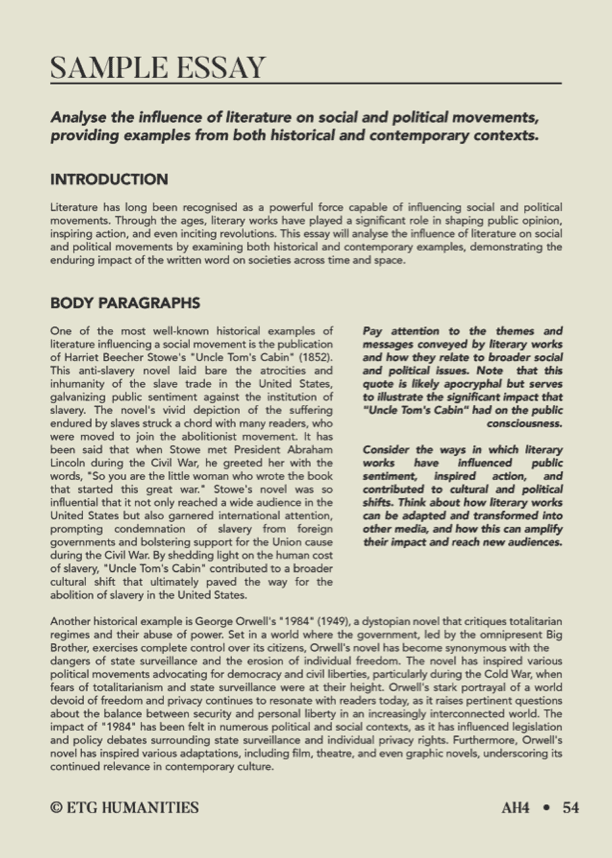
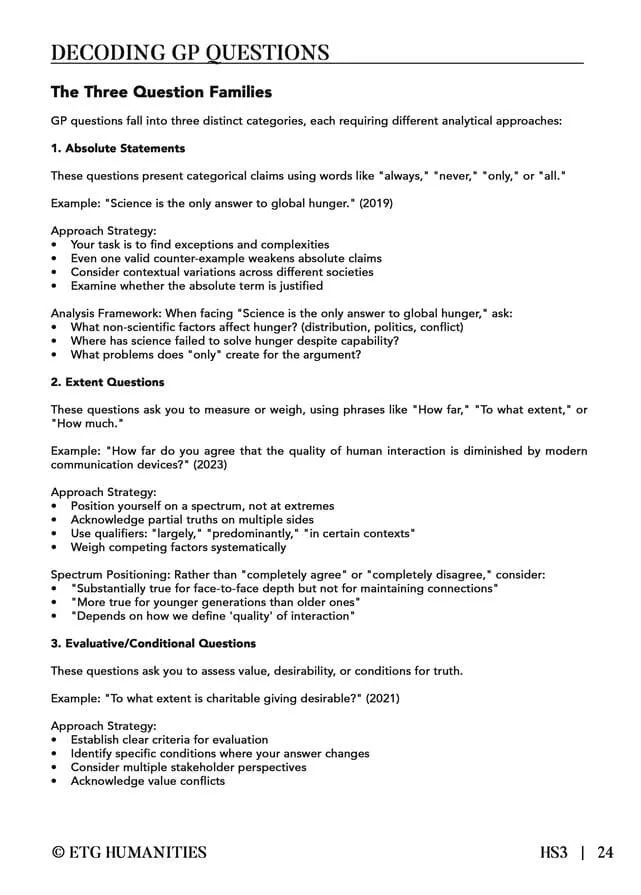
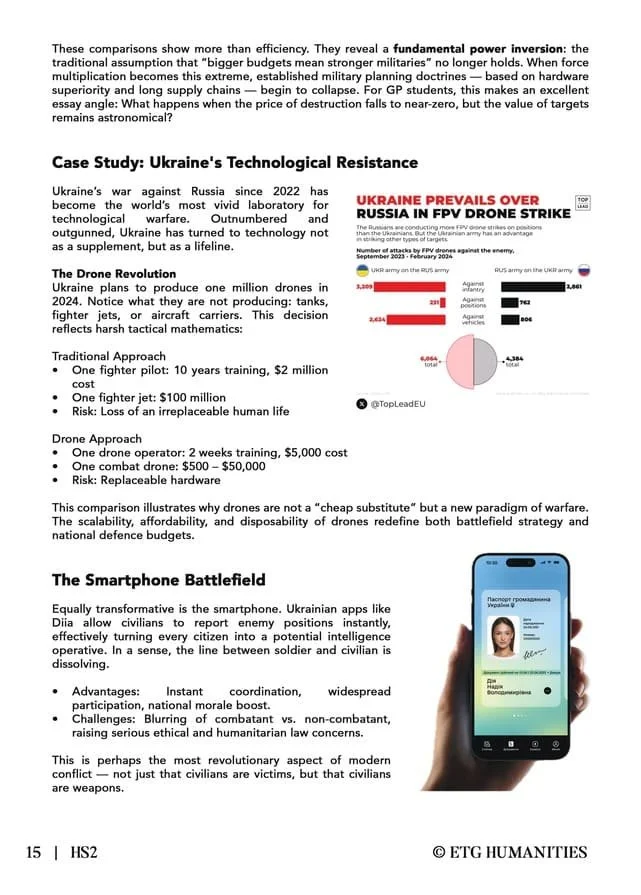
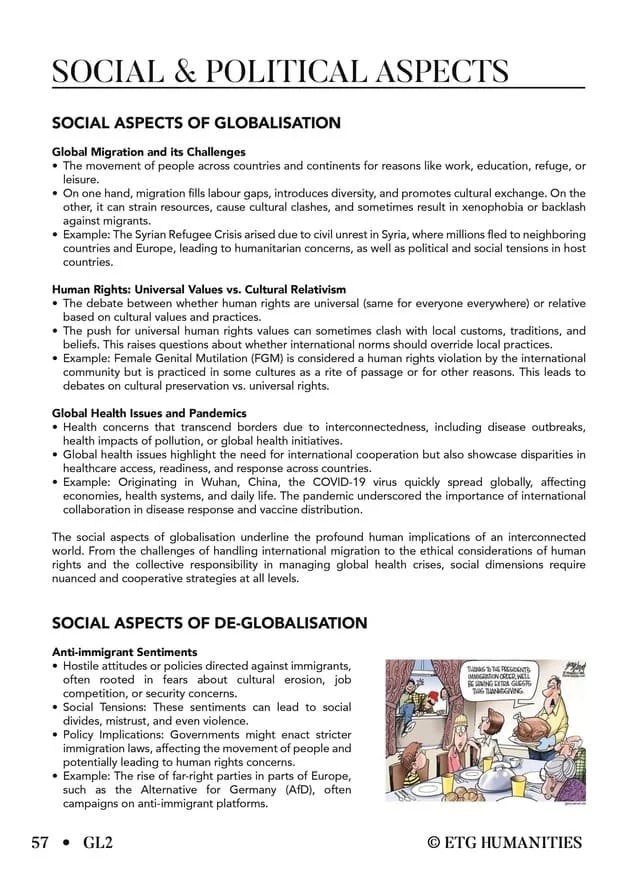
Updated for the 2025–2026 examination cycle. This is not a list of vaguely relevant subjects. It mirrors the exact thematic categories the A Level examination tests.
Attend a trial class and walk away with a previous term's in-house textbook. Not a sample. A full, professionally produced chapter. Enrolled students receive a brand new textbook every term as part of the programme, included free. The trial textbook is your first look at what that means in practice. Take it home and judge the programme from its materials.
Join our mailing list and receive a complete 33-page chapter on Science, Technology and Ethics, the same format and quality as our full in-house textbooks, so you can assess the programme before you commit to anything.
What it actually feels like to go through a two-year programme built on structured practice, high writing volume, and feedback on every piece.
Most students in our previous GP cohorts achieved an A or B grade. We do not publish a specific percentage A-rate, because GP improvement is gradual and multifactorial, and an honest framing of the track record is more useful to you than a number taken out of context. The curriculum, the writing volume, and the feedback structure are the evidence we stand behind.
Still deciding? The trial comes with a free in-house textbook, yours to keep regardless of whether you enrol.
Onsite classes at Coronation Plaza and Upper Serangoon / Kovan. Zoom available for all levels and timings.
Financial assistance is available for students who need it. Speak to our admin team.
Classes run weekly at Coronation Plaza, Upper Serangoon / Kovan, and Zoom. JC1 and JC2 slots available across both Tuesdays and Fridays.
Attend a trial class. See how GP is taught at ETG. Browse the materials. Speak with our admin team. The trial is not designed to transform you. It is designed to let you make an informed decision about a two-year programme.
A complete ETG GP class: same content, same format, same teaching as a regular week.
A previous term's professionally produced textbook, the same one enrolled students receive every term as part of the programme. Take it home regardless of whether you enrol.
Ask our admin team about timings, levels, programme structure, and any other questions before you decide.
The trial is a first look. There is no pressure and no obligation to enrol after attending.
"GP does not improve after one lesson. The trial is for you to understand the programme, not to be transformed by it. The students who do well at ETG are the ones who join and stay for the two-year structure. That is the honest truth about what this programme is."
One lesson. One free in-house textbook, the same one enrolled students receive every term. A clear look at a programme eight years in the making, before you commit to anything.
Questions about timing, level placement, or fees? Our admin team is on WhatsApp at +65 8121 6488.
Direct answers. No dodging.
That depends on what you are looking for. If you want a programme built on systematic two-year structure, in-house textbooks updated every term, significantly higher writing volume than typical programmes, and AQ taught as a dedicated skill, ETG GP is worth a serious look.
We have been running the GP programme since 2018. We opened to full scale only in 2026, after eight years of annual curriculum refinement. Most students in our cohorts achieved A or B grade. We do not manufacture a percentage A-rate, and we do not claim to be the only credible option. What we deliver is specific, verifiable, and honest.
The programme runs over two years. JC1 covers 6 core themes systematically, with monthly essay practice, comprehension strategy instruction, and an in-house textbook updated every term. JC2 adds 6 further themes at greater depth, with all 12 revisited before A Levels, alongside TYS coverage, prelim preparation, and full mock papers.
Both papers are covered: Paper 1 (essay) and Paper 2 (comprehension including AQ). Writing volume is deliberately high. Close to 80 essays by A Levels, every one returned with detailed feedback. AQ technique is taught explicitly, not just mentioned in passing.
Because GP improvement is gradual and multifactorial, more so than Economics. A published percentage A-rate would be meaningless without context: which cohort year, what starting grade, which school, how many lessons attended, whether the student also had school GP classes. Manufacturing a percentage to fill that gap would not serve you honestly.
What we can say is that most students in our previous GP cohorts achieved A or B grade, across eight years of running the programme. We believe the curriculum substance (the textbook quality, the writing volume, the structured two-year arc) is the more credible proof point. The honest framing of our track record is itself a signal of how this programme operates.
You can join in JC2, and many students do. The programme's current-affairs integration, AQ instruction, and writing volume are still highly valuable in JC2, and the back-catalogue of in-house textbooks means content gaps can be addressed.
The honest answer, though: students who join in JC1 have a structural advantage. They build essay habits over two years; JC2 joiners are compressing that into one. That is the truth about a two-year programme. If you are in JC2, joining is better than not joining. But joining earlier is structurally better.
Every ETG GP textbook is produced entirely in-house through a structured four-phase process. First, each chapter is scoped against 10 years of past-year question history, so it is exam-relevant from the ground up, not just topically interesting. Second, a research phase identifies verified statistics, Singapore-specific data, and balanced perspectives before drafting begins. Third, the chapter is drafted under explicit constraints: model essays are calibrated to realistic Band 4–5 responses (not aspirational ideals no student can reproduce), and AQ passages are original prose written specifically for the chapter. Fourth, each chapter goes through a minimum of five iterations before it is finalised.
The programme lists each textbook at $49.90, but enrolled students receive a new one every term as part of the programme, free. No additional purchase required. The reference price reflects the calibre of material, not a cost you pay.
By the end of JC1, ETG GP students have written 40+ full essays. By A Levels, close to 80, every one returned with detailed, structured feedback. This is not a marketing claim. It is the direct result of monthly guaranteed essay practice, every term, without exception.
A typical JC student writes approximately 10–15 essays across two years, with sporadic feedback. The gap matters because GP improvement is fundamentally a function of practice volume, not passive consumption of content. The students who improve are the ones who have written enough times that argument structure becomes instinct rather than effort.
Yes, explicitly, as a dedicated skill and not mentioned in passing. The AQ carries 12 marks in Paper 2 and is the most differentiating component for students in the B-to-A range. ETG GP teaches AQ technique specifically: how to draw on the passage selectively, how to integrate your own knowledge, how to address both sides of the task structure, and how to manage time across the full Paper 2.
Most tuition notes cover essays. We cover the AQ with the same rigour.
Yes. ETG GP runs Zoom classes for both JC1 and JC2 on Tuesdays and Fridays (5–7pm for JC1, 7–9pm for JC2). Online classes cover the same curriculum, textbooks, and feedback standards as onsite classes at Coronation Plaza and Upper Serangoon / Kovan.
Zoom rates are $100/lesson (JC1) and $110/lesson (JC2). The trial class is available for online students too. Contact our admin team via WhatsApp at +65 8121 6488 to confirm a Zoom trial slot.
A complete ETG GP lesson: same content, same teaching format, same rigour as a regular class. Not a watered-down demo. You will receive a previous term's in-house textbook to keep regardless of whether you enrol (the same kind enrolled students receive every term), and you can speak with our admin team about timing, level placement, and how the programme is structured.
One thing to set correctly: GP does not improve after one lesson. The trial is for you to understand the programme and judge its quality, not to be transformed by it. If the curriculum, the teaching approach, and the textbook quality meet your standards, that is the signal to join. The improvement comes from the two-year structure, not the first lesson.
Students who join in JC1 are structurally advantaged. That is the honest truth about a two-year programme. The trial is one lesson. The textbook is yours to keep. The rest is a decision about how seriously you want to take the next two years.
Everything. Covered.